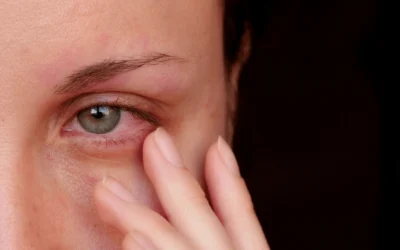
Dry, burning, watery, or gritty eyes are not always caused by screen time or the weather. Hormonal changes can also affect the quality and amount of your tears, making dry eye symptoms more noticeable at different stages of life.
Hormones help regulate the glands and oils that support a healthy tear film. When those hormone levels shift, the eyes may not stay lubricated as comfortably as they once did. If symptoms are persistent or disruptive, dry eye care can help identify contributing factors and recommend treatment based on your needs.
Why do hormones affect dry eye?
A healthy tear film includes water, oil, and mucus. These layers work together to keep tears from evaporating too quickly and help them spread evenly across the eye’s surface.
Hormones — including estrogen, progesterone, and androgens — can influence tear production and the oil-producing meibomian glands along the eyelids. Changes in hormone levels may reduce tear stability, increase evaporation, or contribute to inflammation on the eye’s surface.
As a result, dry eye may cause:
- Burning, stinging, or a scratchy sensation
- Redness and irritation
- Blurry vision that improves with blinking
- Sensitivity to light
- Excessive tearing, which can be a response to eye-surface irritation
- Contact lens discomfort
When can hormonal dry eye symptoms occur?
Hormone-related dry eye can affect people at different times, and symptoms are not limited to one age group.
Pregnancy and postpartum changes
During pregnancy, shifting hormone levels may change tear production and make contact lenses feel less comfortable. Some people also notice dry eye symptoms after pregnancy as hormones continue to fluctuate.
Perimenopause and menopause
Dry eye is especially common during perimenopause and menopause. Lower estrogen and androgen levels may affect tear quality and meibomian gland function, leaving tears more likely to evaporate. Symptoms can become more persistent during this stage of life, even for someone who has not had dry eye concerns before.
Menstrual cycle changes
Some people notice eye dryness, irritation, or contact lens discomfort at certain points in their menstrual cycle. While symptoms may be temporary, recurring discomfort is worth discussing during an eye exam.
Hormonal medications and treatments
Birth control, hormone replacement therapy, fertility treatments, and other medications that affect hormones may also influence dry eye symptoms. This does not mean you should stop a prescribed medication. Instead, let your eye doctor know about symptoms so they can help coordinate appropriate care.
What can help with hormone-related dry eye?
Relief depends on the cause and severity of your symptoms. Lubricating eye drops, eyelid care, environmental changes, and targeted dry eye treatments may all play a role. An eye exam can also help rule out other contributors, such as allergies, contact lens issues, medication side effects, or eyelid gland dysfunction.
Find lasting relief for dry, uncomfortable eyes
Hormonal changes are a normal part of life, but ongoing dry eye discomfort does not have to be something you simply live with. We can evaluate your symptoms and create a personalized plan to help keep your eyes more comfortable and your vision clear.